Long beans—also known as yardlong beans, Chinese long beans, or Vigna unguiculata—are among the easiest and most rewarding vegetables you can grow at home. Whether you have a large backyard or just a small balcony, container gardening offers a simple, space-efficient way to enjoy a continuous supply of crisp, tender long beans.
Their fast growth, low maintenance, ability to thrive in heat, and high productivity make them a favorite among urban gardeners. In this 1200-word guide, you’ll learn exactly how to grow long beans in containers for maximum yield, from choosing the right pot to harvesting arm-length pods.
Let’s get started!
Why Long Beans Are Perfect for Containers
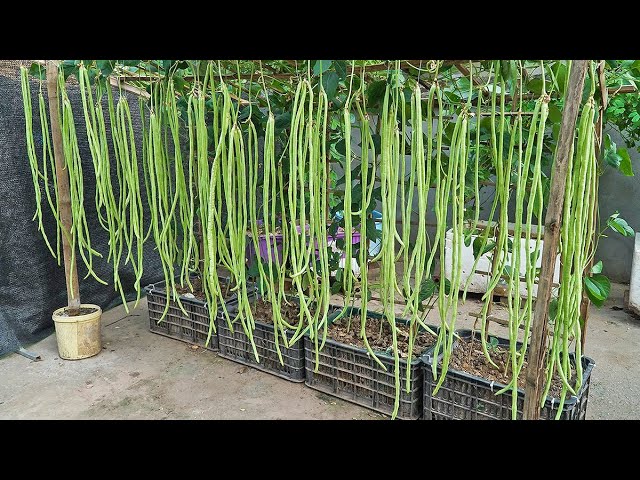
Before planting, it helps to know why long beans are such superstars in container gardening:
✔ Heat-loving tropical plant
Thrives in hot climates where other veggies struggle.
✔ Extremely fast growth
Seed to harvest in 45–60 days.
✔ High-yielding climbing vine
A single plant can produce dozens of pods every week.
✔ Low nutrient demands
Doesn’t require heavy fertilization like other vegetables.
✔ Resilient and pest-resistant
One of the easiest legumes to grow organically.
If you’re looking for a vegetable that grows fast, climbs easily, and gives generous harvests—this is it.
Best Containers for Growing Long Beans
Container size is one of the biggest secrets to high yields.
✔ Minimum depth: 12–14 inches
Long beans don’t have deep taproots, but they love spreading sideways.
✔ Best container types:
- 20–30 litre buckets
- Grow bags (12–15 inches wide)
- Large plastic tubs
- Cement pots
- Fabric pots (allow better root aeration)
✔ Drainage is a must
Long beans hate waterlogged soil.
Ensure:
- 8–10 drainage holes
- A raised platform or bricks underneath
A large container + good drainage = stronger vines + more pods.
Soil Mix for Maximum Growth
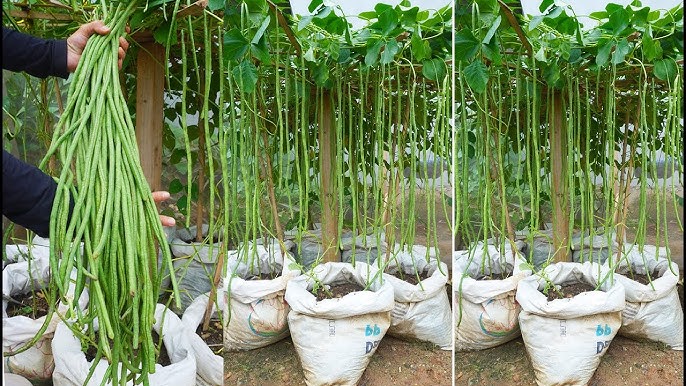
Long beans grow best in light, airy, slightly sandy soil.
Avoid heavy clay soil—it slows growth.
Recommended Soil Mix:
- 40% garden soil
- 30% compost or vermicompost
- 20% cocopeat
- 10% sand or perlite
Add boosters for extra yield:
- 1 handful neem cake → prevents soil pests
- 1 handful bone meal → stronger root development
- 1 cup wood ash → increases flowering
Mix well before filling the pot.
Seed Selection & Sowing Method
Long beans grow best when directly sown into containers.
✔ Choose fresh seeds
Older seeds have poor germination.
✔ Sowing depth: 1 inch
Plant seeds 2–3 inches apart along edges of the container.
✔ Germination time: 5–7 days
In warm weather, sprouts appear quickly.
✔ Keep soil moist but not soggy
Spray lightly twice a day until seeds sprout.
Tip: Soak seeds in water for 4–6 hours before sowing to speed up germination.
Provide a Strong Trellis — The Secret to High Yields
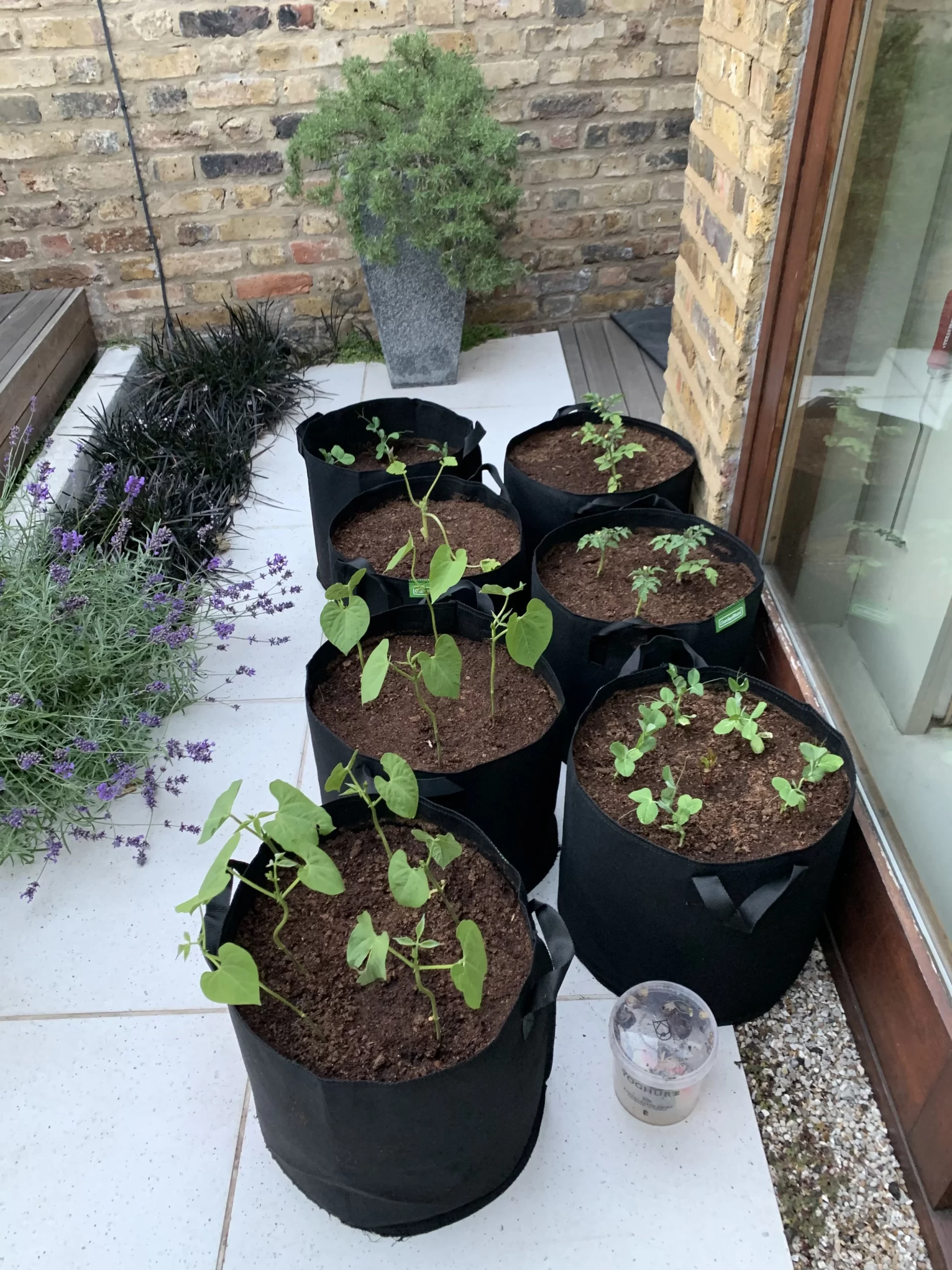
Long beans are climbing vines that can grow 6–10 feet long.
Without support, they:
- Produce fewer pods
- Tangle and break
- Attract more pests
- Grow slowly
Best Trellis Ideas:
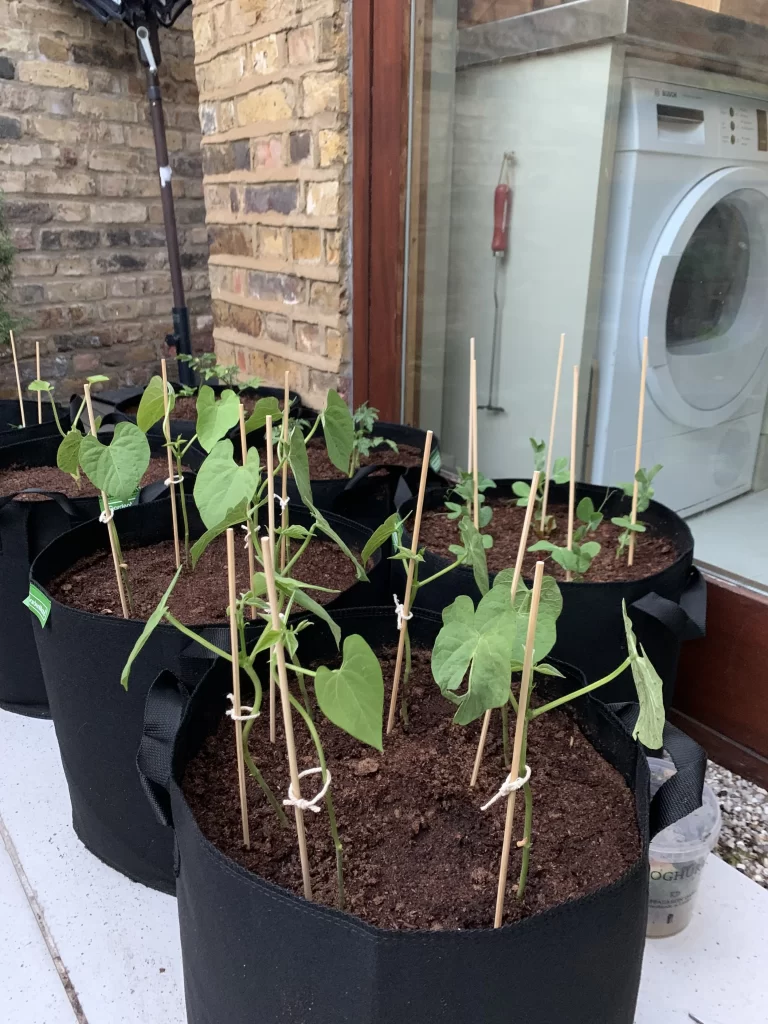
- Bamboo poles tied in a teepee shape
- Nylon rope or jute string up a wall
- Wire mesh
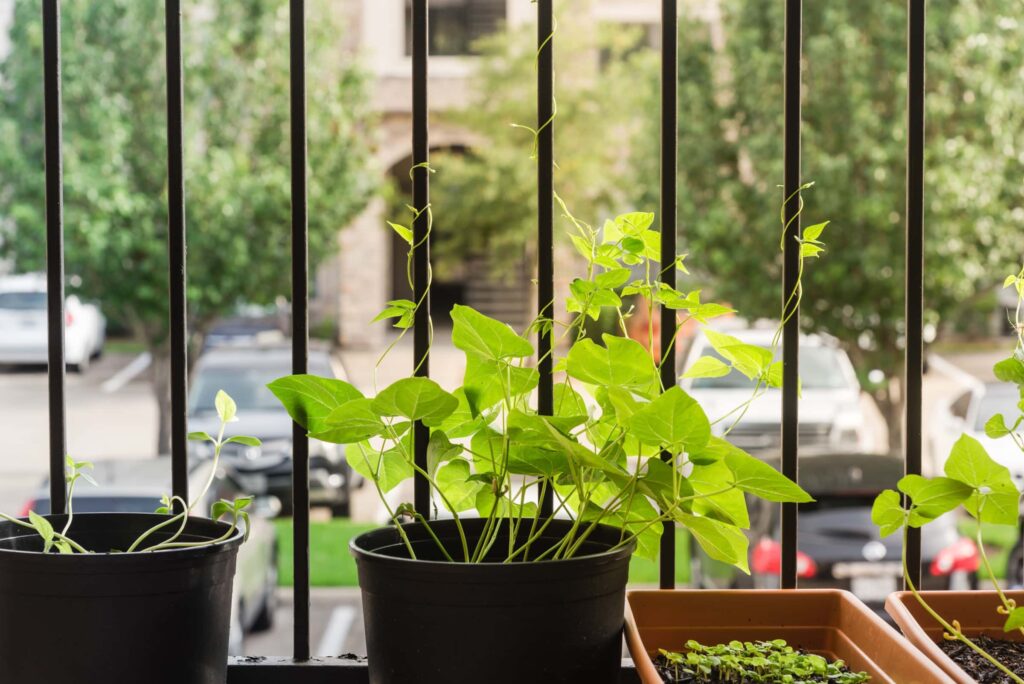
- Balcony railing
- Vertical netting
Attach the trellis immediately after planting.
Fast-growing vines latch on quickly, and early support reduces stress.
Watering Long Beans the Right Way
Long bean plants prefer evenly moist soil, especially during flowering and pod formation.
Watering Tips:
- Water every morning
- In extreme heat, water again in the evening
- Avoid splashing leaves to prevent fungal diseases
- Make sure excess water drains out
- Use mulch (dry leaves or straw) to retain moisture
Overwatering is the #1 cause of plant yellowing, so keep the soil moist—not wet.
Sunlight Requirements
Sunlight plays a huge role in pod production.
✔ Minimum: 5 hours
✔ Ideal: 6–8 hours
Plants grown in full sunlight:
- Grow faster
- Produce longer, thicker pods
- Flower earlier
- Resist fungal infections better
In low light, you’ll see:
- Thin vines
- Few flowers
- Short pods
Place the container in the brightest spot you have.
Fertilizing for Strong Vines & Heavy Harvests
Long beans do not require heavy feeding, but a small amount of fertilizer increases yield dramatically.
1. Early Growth (Week 1–3)
Use nitrogen-rich fertilizer for leaf development:
- Vermicompost
- Cow dung manure
- Mustard cake water (1:20 ratio)
Apply every 10 days.
2. Pre-Flowering Stage (Week 3–4)
Boost micronutrients:
- Liquid seaweed
- Fish amino acid
- Panchagavya
Strengthens vines before flowering.
3. Flowering & Fruiting Stage (Week 5+)
Switch to high-potassium fertilizers such as:
- Banana peel tea
- Wood ash water
- Compost tea
- Bone meal
Potassium = more flowers + longer pods + better taste.
Avoid too much nitrogen here
Excess nitrogen → lots of leaves, fewer beans.
How to Maximize Flowering & Pod Production
Follow these high-yield hacks:

✔ 1. Train the vines
Twist gently around the trellis to help upward growth.
✔ 2. Pinch the growing tips
After the plant reaches 1 meter, pinch the tip to encourage branching.
✔ 3. Remove yellow or weak leaves
Improves air circulation and directs energy to pods.
✔ 4. Ensure consistent watering
Water stress causes flowers to drop.
✔ 5. Continue harvesting
The more you harvest, the more the plant produces.
Common Pests & Organic Control Methods
Long beans are hardy, but some pests may appear.
1. Aphids
Symptoms: Sticky leaves, curled tips
Solution:
- Neem oil (weekly)
- Soap water spray
2. Whiteflies
Solution:
- Yellow sticky traps
- Garlic-chili spray
3. Caterpillars
Solution:
- Handpick
- BT spray (organic)
4. Powdery mildew
Solution:
- Milk spray (1:10 dilution)
- Improve airflow
Healthy plants resist pests naturally, especially with good sunlight and proper watering.
When and How to Harvest Long Beans
Long beans begin producing pods in 45–60 days.
Signs they’re ready:
- Smooth skin
- Flexible, not stiff
- 12–20 inches long (variety dependent)
- Easily snaps off with gentle pressure
Harvesting Tips:
- Pick every 2–3 days
- Do not allow pods to fully mature
- Early harvesting stimulates continuous production
A single well-grown plant can produce hundreds of pods in a season!
Common Problems & Solutions
Yellow Leaves
Cause: Overwatering, nutrient deficiency
Fix: Improve drainage, add compost + wood ash.
Flowers falling off
Cause: Heat stress, lack of water
Fix: Keep soil moist, add shade during extreme heat.
Small pods
Cause: Low potassium
Fix: Apply banana peel fertilizer.
Vines not climbing
Cause: No trellis
Fix: Install support immediately.
Final Thoughts: Anyone Can Grow Loads of Long Beans in Containers!
Growing long beans in containers is one of the easiest and most satisfying gardening projects—even for beginners. With the right soil mix, proper sunlight, a simple trellis, and regular harvesting, you’ll enjoy a constant supply of long, tender, organic beans right from your balcony or backyard.