Growing your own lemon tree at home is not only satisfying but also incredibly rewarding. Imagine stepping outside your kitchen to pluck a fresh, juicy lemon straight from your backyard or balcony—nothing beats that! If you’ve been wanting a lemon tree but thought it takes too long to grow, this guide is for you. With the right techniques, you can root a lemon plant quickly, speed up its growth, and enjoy a healthy, thriving citrus tree much sooner than you think.
In this step-by-step guide, we’ll explore the fastest methods to root lemon cuttings, how to boost growth naturally, and essential care tips that dramatically speed up development. Whether you’re a beginner gardener or a seasoned plant lover, this method guarantees success.
Why Grow Lemon Trees at Home?
Before diving into the techniques, let’s explore why lemon trees are one of the best plants to grow at home:
They grow quickly
Lemons are among the fastest-growing fruit trees, especially when propagated correctly.
Perfect for containers
Even small balconies or terraces can host a full, fruiting lemon tree.
Aromatic and beautiful
Their glossy leaves and fragrant blossoms make them great decorative plants.
Continuous fruiting
Healthy lemon trees produce fruit year-round in warm climates.

Low maintenance
Once established, they thrive with minimal care.
Best Method to Grow Lemon Trees Fast: Rooting Lemon Cuttings
While you can grow lemon trees from seeds, it takes much longer and doesn’t guarantee the same quality as the parent tree. Cuttings, on the other hand, produce faster, stronger, and more reliable results. Cuttings grow into mature, fruiting trees in a significantly shorter time.
Let’s break down the most effective technique: quick-root hydroponic rooting + soil transfer.
STEP-BY-STEP GUIDE TO QUICKLY ROOT LEMON CUTTINGS
Step 1: Select the Perfect Cutting
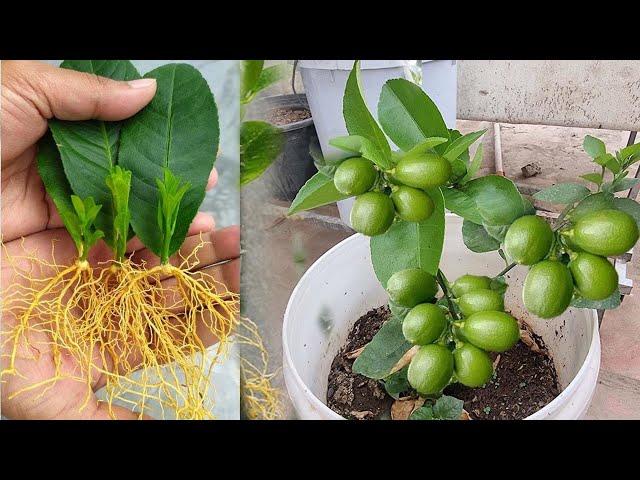
Choosing the right branch is the foundation of successful propagation.
Look for:
- A healthy lemon tree (free from pests and disease)
- A semi-hardwood branch—neither too young nor too woody
- A length of 6–8 inches (15–20 cm)
- At least 3–4 nodes on the branch
Avoid branches that are either very soft or extremely old. Semi-hardwood gives the best rooting success.
Step 2: Prepare the Cutting
Once you’ve selected the right branch:
- Make a clean cut below a node.
- Remove lower leaves—keep only the top 2–3 leaves.
- Cut each leaf in half to reduce moisture loss.
- Optional: Gently scrape the bottom bark to expose inner tissue—boosts rooting speed.
This ensures the cutting focuses its energy on root formation instead of leaf hydration.

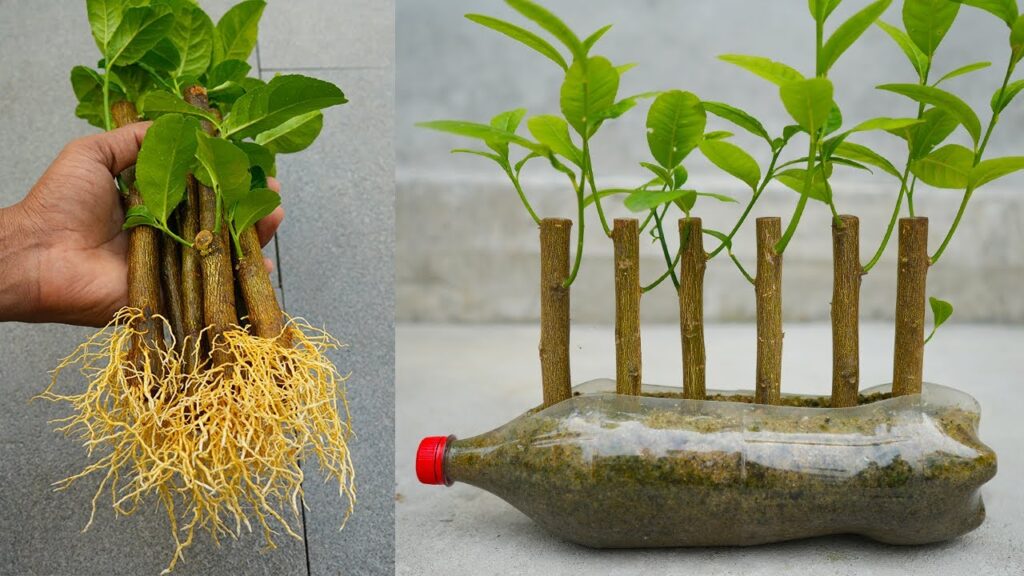
Step 3: Root the Cutting Using the Fast Hydroponic Method
This is the secret trick many expert gardeners use to speed up root development.
What you need:
- A transparent glass or jar
- Clean, room-temperature water
- Rooting hormone (optional but boosts success)
How to do it:
- Dip the bottom of the cutting in rooting hormone.
- Place it in water, ensuring only 1–2 inches of the stem is submerged.
- Place jar in bright indirect sunlight—not harsh direct light.
- Change the water every 2–3 days to prevent fungal issues.
What to expect:
- Tiny root bumps in 7–14 days
- Visible roots in 2–3 weeks
- Fully developed roots (2–3 inches long) in 4–5 weeks
Hydroponic rooting is much faster than soil rooting because the cutting gets constant moisture and oxygen.
Step 4: Transfer Rooted Cutting to Soil (Critical Step)
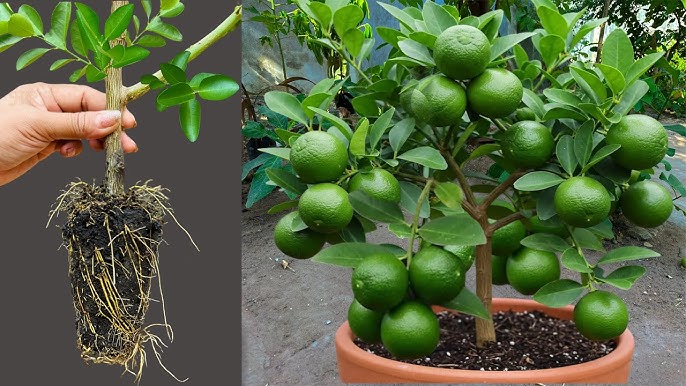
Once the roots reach finger length, it’s time to transplant.
Best potting mix:
- 40% coconut coir or peat moss
- 30% perlite or sand
- 20% compost
- 10% garden soil
This mix stays aerated and prevents root rot—essential for young citrus roots.
How to transplant:
- Fill a pot with the soil mix.
- Make a hole deep enough to place the roots without curling.
- Insert the cutting gently.
- Press soil lightly—not too tight.
- Water thoroughly.
After transplant care:
- Keep in indirect sunlight for 5–7 days.
- Slowly introduce morning sunlight.
- Avoid overwatering.
Once the plant adjusts, it will start shooting out new leaves—a sign that rooting was successful.
Step 5: Give Your Lemon Plant Quick-Growth Conditions
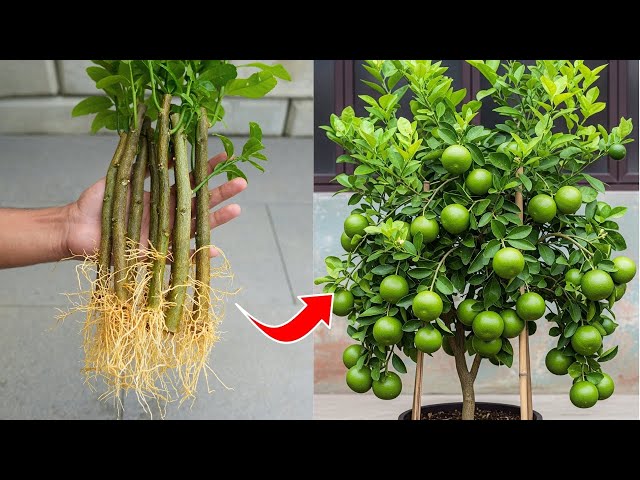
To accelerate growth, follow these simple but powerful tips:
Top Tricks to Make Lemon Trees Grow Faster
1. Provide 6–8 Hours of Direct Sunlight
Lemon trees love sunlight. The more light they get, the faster they grow.

Indoor growers should place the plant:
- Near a south-facing window
- Or use a grow light (10,000–15,000 lux)
2. Water Smartly—Not Too Much, Not Too Little
Overwatering slows growth more than anything else.
Watering rule:
- Water only when the top 2 inches of soil are dry.
- Ensure pot has proper drainage.
- Use deep watering to reach the roots.
3. Feed Monthly with Organic Fertilizers
Fast growth requires nutrients.
Use:
- Vermicompost
- Seaweed extract
- Cow dung manure
- Citrus fertilizer (NPK 6-3-3 or 5-2-1)
- Epsom salt once a month for magnesium
Bonus tip:
Banana peel fertilizer boosts potassium and enhances fruiting.
4. Mulch to Keep Soil Moist & Cool
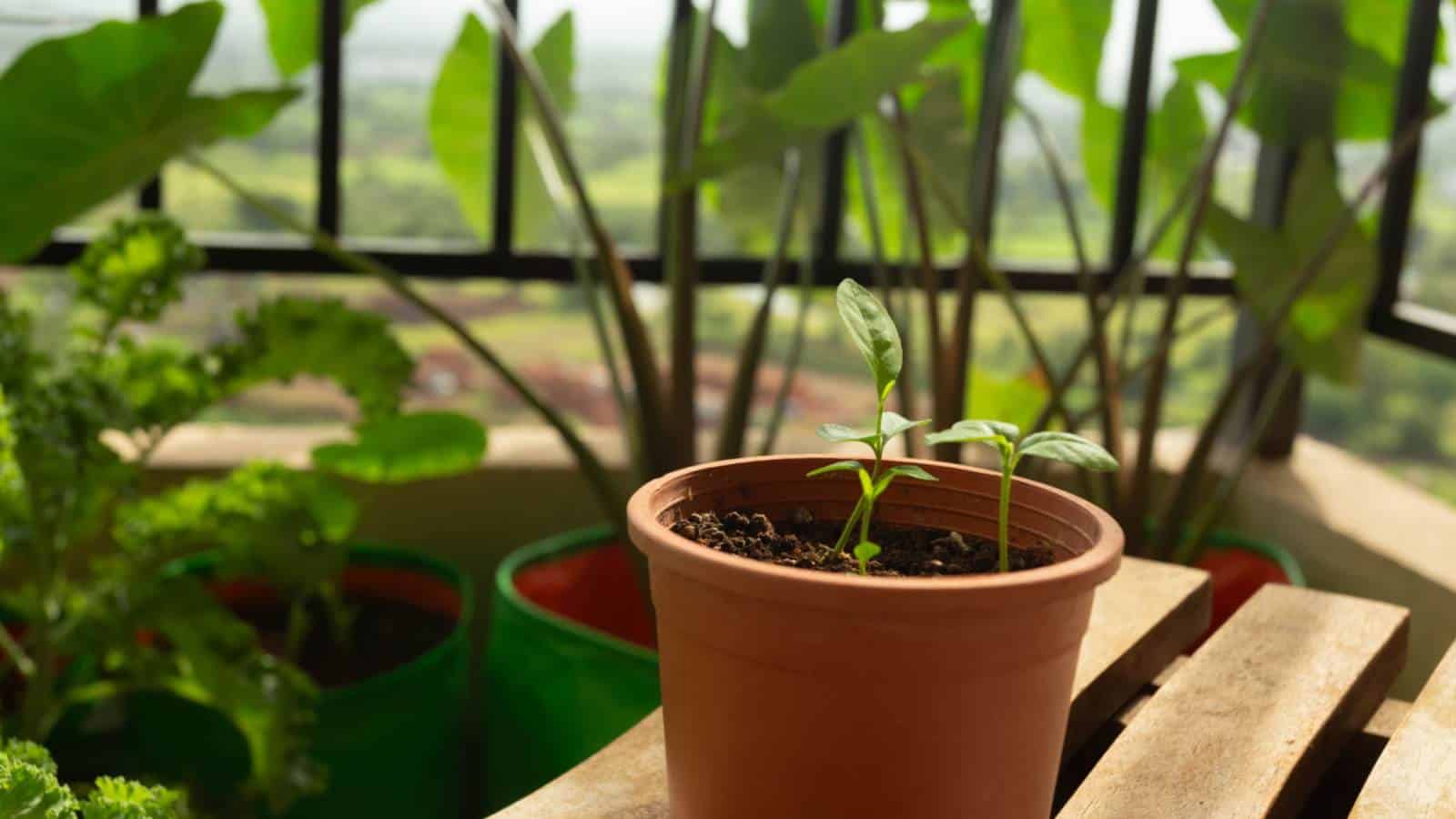
Use:
- Dried leaves
- Wood chips
- Coconut husk pieces
Mulching helps maintain moisture and stimulates healthy root activity.

5. Prune Early for Bushier, Faster Growth
Trim weak shoots. If your plant grows too tall, pinch the top to stimulate side branches. This results in:
- Faster canopy development
- Stronger structure
- Earlier fruiting
6. Protect from Pests
Lemon trees attract:
- Aphids
- Leaf miners
- Whiteflies
Spray neem oil weekly during early growth to keep the plant healthy and problem-free.
7. Use a Slightly Acidic Soil pH (5.5–6.5)
Citrus trees absorb nutrients fastest in slightly acidic soil. You can add:
- Coffee grounds
- Pine needles
- A few drops of lemon juice in water (once a month)
This keeps pH optimal for strong root growth.
When Will Your Lemon Tree Start Producing Fruit?
With proper care:
- A cutting-grown lemon tree can begin fruiting in 1.5–3 years.
- Grafted lemon trees may fruit even faster—within 1–2 years.
Your tree will bloom with fragrant white flowers before producing small green lemons that gradually turn yellow.

Final Thoughts
Growing a lemon tree fast is absolutely possible with the right propagation method and care routine. By using the hydroponic rooting technique, choosing a healthy cutting, and giving your plant the sunlight, nutrients, and environment it needs, you can drastically accelerate growth.
Soon, you’ll have a lush, green lemon tree that not only beautifies your space but also provides fresh, home-grown lemons for teas, lemonades, and cooking.
If you want more articles like this—about mango, guava, orange, or other fruit tree propagation—just let me know!