Growing a mango tree at home is a dream for many gardeners. While most people grow mangoes from seeds, this method often produces trees that take many years to fruit—and sometimes the fruits are not true to the parent plant. That’s why propagating mango trees from cuttings is becoming a popular, reliable, and fast technique. It helps you grow a mango tree that is genetically identical to the parent plant, allowing you to enjoy the same delicious fruits much sooner.
In this step-by-step guide, you’ll learn how to propagate mango trees from cuttings, the perfect branch to choose, how to root it successfully, and how to care for your new mango plant until it becomes a strong, fruitful tree.
Let’s begin this powerful propagation method!
Why Grow Mango Trees from Cuttings?
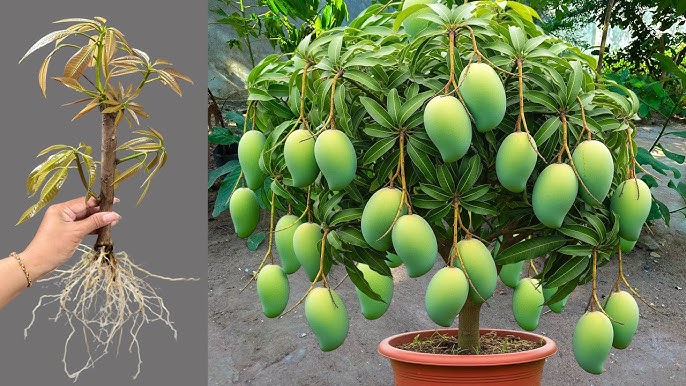
Before diving into the steps, it’s important to understand why cuttings are a great choice:
Clonal Propagation
The new plant will be identical to the mother tree. This ensures fruit quality, size, sweetness, and growth habit remain the same.
Faster Fruiting Than Seeds
Seed-grown trees usually take 6–10 years to bear fruit.
Cutting-grown trees can fruit in 3–5 years, especially with proper care.
Great for Limited Space
You can choose dwarf or semi-dwarf branches to propagate and grow in pots.
Simple, Low-Cost, and Beginner-Friendly
No need for grafting skills—just follow the right method, and your cutting will root successfully.
Best Time to Take Mango Cuttings
Mango trees respond best when the weather is warm.
Ideal months:
- Late spring
- Early summer
- Early monsoon (when humidity is high)
Avoid:
- Winter
- Extremely hot dry months
During warm conditions, mango stems remain active and root quickly.
Step 1: Choosing the Perfect Mango Cutting
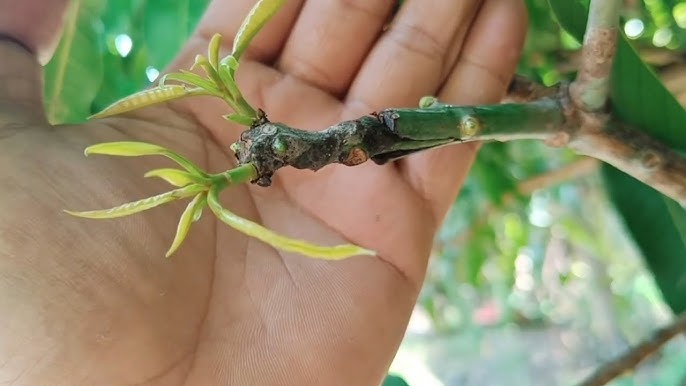
Your success depends heavily on selecting the right type of branch.

Choose a semi-hardwood cutting
Not too soft, not too woody.
This stage has the best rooting hormones.
Length: 8–10 inches
Long enough to support multiple nodes.
Thickness: Like a pencil
Thicker stems contain more nutrients for rooting.
Must have 3–5 nodes
Nodes are root-activation points.
Choose disease-free and pest-free wood
Healthy branches root faster.
Avoid flowering branches
Flowering drains energy away from rooting.
Step 2: Preparing the Cutting Properly
Once you have selected your cutting:
Make a clean cut just below a node
Use a sharp, disinfected pruner.
Remove all the leaves except 1–2 at the top
Leaves evaporate a lot of water; too many causes the cutting to dry out.
Lightly scrape the bottom 1 inch
This exposes inner tissue and encourages faster root formation.
Dip in rooting hormone (optional but recommended)
Mango wood is slow to root naturally, so hormones boost success.
If you don’t have rooting hormone, you can use natural alternatives like:

- Honey
- Aloe vera gel
- Cinnamon powder
Step 3: Preparing the Best Rooting Medium
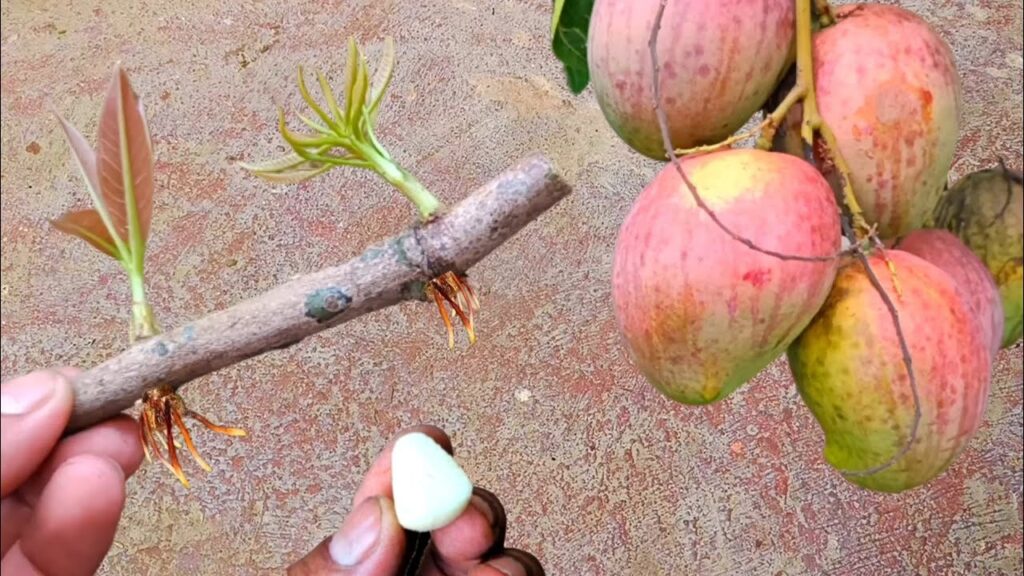
Mango cuttings need a light, airy, and well-draining rooting medium.
Recommended Mix:
- 50% cocopeat
- 30% coarse sand or perlite
- 20% garden soil
This mix:
- Retains moisture
- Allows oxygen flow
- Prevents rotting
Choose a pot with drainage holes
Good drainage is key to avoid fungal issues.
Step 4: Planting the Mango Cutting
Follow these steps carefully:
Make a hole in the rooting medium
This prevents hormone from rubbing off.
Insert the mango cutting 2–3 inches deep
Ensure nodes are below the soil surface.
Firm the soil around the cutting
This stabilizes the stem.
Water lightly
Just enough to make the medium moist—not soggy.
Step 5: Create a Humid Environment (Mini Greenhouse Method)
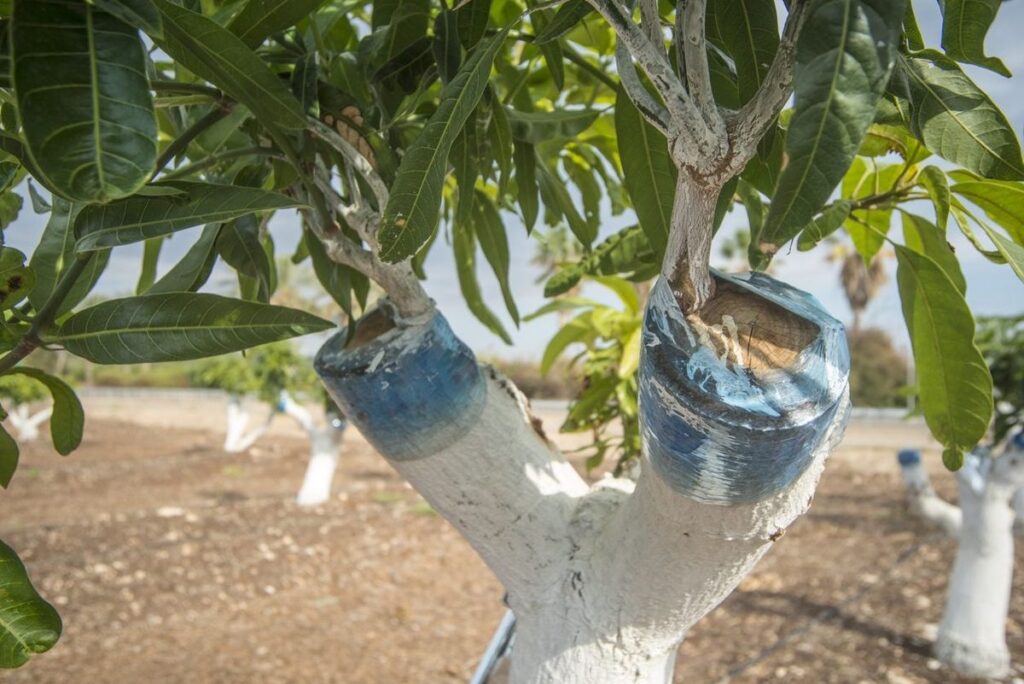
Humidity is the MOST important factor for mango rooting.
To maintain constant moisture:
Cover the pot with a plastic bag
OR
Use a transparent bottle as a dome
This creates a mini greenhouse that:
- Prevents moisture loss
- Traps humidity
- Speeds up root formation
TIP:
Make 2–3 tiny holes for air circulation to prevent fungal growth.
Step 6: Provide Ideal Growth Conditions
Light:
Bright, indirect sunlight.
Never keep cuttings under harsh afternoon sun.
Temperature:
24°C to 32°C is perfect for rooting.
Watering:
Keep the medium moist but never waterlogged.
Water lightly every 4–5 days.
Stability:
Do not shake or move the cutting frequently.
Movement disturbs the delicate root formation process.
Step 7: Rooting Time — What to Expect
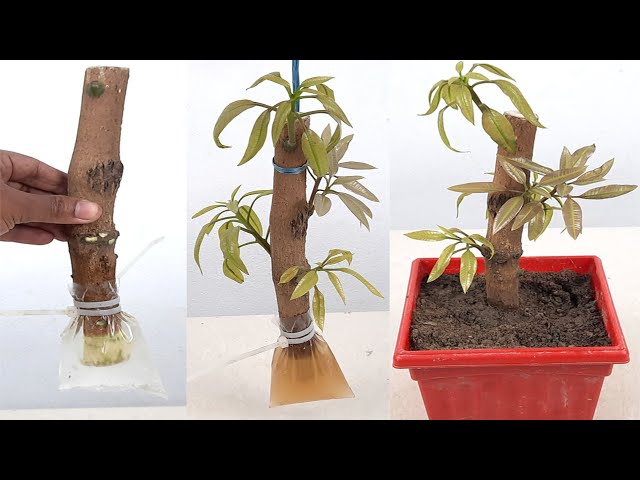
Mango cuttings take longer than lemon or guava cuttings.
Rooting time: 4–8 weeks
Some varieties root even faster in warm, humid climates.
Signs that roots are forming:
- New buds appear
- Cutting stays green and firm
- Leaves begin to enlarge
- No wilting
If the cutting turns brown or shrivels, discard and start again.
Step 8: Transplanting the Rooted Mango Cutting
Once your cutting has grown visible roots (1–2 inches long), it’s time to shift it.
Use a bigger pot (10–12 inches)
Choose a nutrient-rich potting mix:
- 40% garden soil
- 30% compost
- 30% sand/cocopeat
Plant the rooted cutting carefully
Avoid damaging the new roots.
Keep it in shade for 1 week
After that, gradually expose it to more sunlight.
Step 9: Caring for Your Young Mango Plant
To help your new mango tree grow faster and healthier:
Sunlight:
4–5 hours of morning sunlight is ideal.
Watering:
Water only when the top soil is dry.
Fertilization:
After 45 days, feed with:
- Vermicompost
- Cow dung
- Seaweed extract (liquid)
Pruning:
Pinch the top once the plant reaches 1 ft height.
This encourages branching and a bushier shape.
Pest Care:
Spray neem oil once every 15 days.
When Will Your Cutting Bear Fruit?
Mango trees grown from cuttings generally fruit in:
3–5 years
This is faster than seed-grown trees.
Fruit quality will be identical to the parent plant, which is the biggest advantage of cutting propagation.
Why Some Mango Cuttings Fail — Common Mistakes to Avoid
Even with good care, mango cuttings can fail. Here’s why:
Using young, soft branches
They dry out quickly.
Soil too wet
Leads to rot.

No humidity dome
Causes moisture loss.
Keeping in direct sun
Heat kills the cutting.
Not removing enough leaves
Leads to dehydration.
Avoid these mistakes to achieve maximum rooting success.
Advanced Tips for 100% Success Rate
Here are expert-level tricks:
Slightly warm the pot using a heat mat
Roots love warm soil.
Use cinnamon as a natural antifungal
Dip the base before planting.
Spray mist inside the plastic dome every 7 days
Adds humidity.
Use thick, mature cuttings for best results
They root slower but more reliably.
Final Thoughts
Propagating a mango tree from cuttings is a powerful, rewarding gardening technique. While it requires patience and perfect conditions, it allows you to grow a genetically identical, fast-fruiting mango tree without using seeds or complex grafting techniques.
With the right cutting, proper humidity, and a well-draining medium, you can successfully root mango branches and turn them into strong, healthy mango plants that will bear delicious fruits for years.