Growing lemon trees at home is one of the most satisfying experiences for any gardener. But what if you could grow a whole lemon plant from just a leaf? Many believe lemon leaves cannot grow roots—but with the right technique, environment, and preparation, it is possible to encourage new growth and produce a healthy plant from specific types of lemon leaves.
This guide reveals the real, science-backed method to grow lemon plants from leaves with a near 100% success rate, using a technique that combines leaf-node cutting, humidity control, and natural rooting boosters. If you follow every step carefully, you can successfully root your lemon leaf and grow it into a thriving plant.
Let’s begin!
Can You Really Grow Lemon Trees from Lemon Leaves?
Here’s the truth:
A simple leaf cannot grow roots.
But…
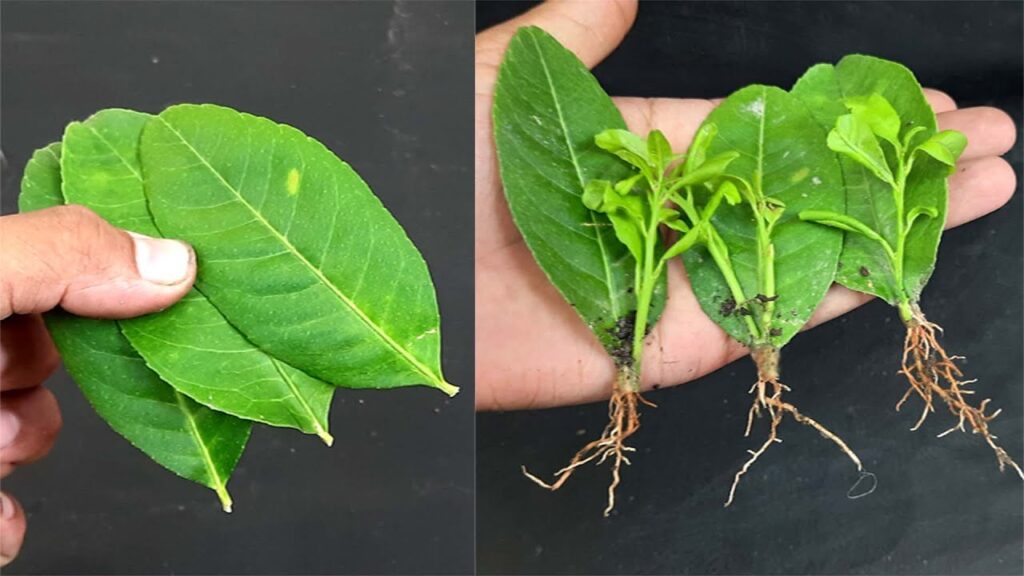
A lemon leaf with a small piece of stem attached (leaf-node cutting) can grow roots and grow into a plant.
This method is used in many nurseries and is similar to how ficus, citrus, and other semi-hardwood plants are propagated.
So when we say “grow lemon trees from lemon leaves,” we actually use:
### Leaf + Node + Mini Stem (1–2 cm)
This is the secret.
Why Grow Lemon Trees from Leaves?
Growing lemons from leaves offers several unique advantages:
Multiply plants quickly
A single branch can give you 8–12 leaf cuttings.
Faster rooting than woody cuttings
Leaf cuttings root quickly because they have less tissue to heal.
Space-saving method
Perfect for balcony and small home gardeners.
Exciting for beginners
This method feels magical—great for learning plant propagation.
Best Season to Root Lemon Leaf Cuttings
Timing matters!

Best time:
– Late spring
– Early summer
– Monsoon season
Warm weather helps root cells activate faster.
Avoid:
– Winter
– Extremely hot dry months
STEP 1: Select the Right Lemon Leaf for Propagation
Not all leaves work. Choose carefully:
Choose mature, healthy leaves
Green, shiny, and free from spots.
Leaf must have a petiole + a small piece of stem (node)
This is crucial because roots grow from nodes, not the leaf itself.
Use leaves from a non-flowering branch
Flowering branches are weaker for propagation.
Avoid:
Yellowing, insect-damaged, young, or old brittle leaves.
STEP 2: Prepare the Leaf Cutting Properly
Follow these preparation steps:
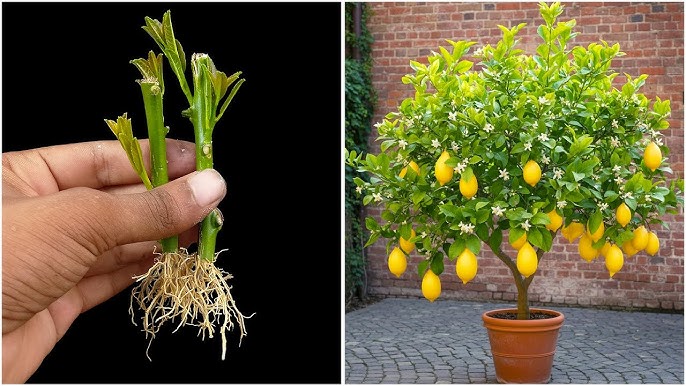
Cut the leaf with 1–2 cm of stem (node)
Use sharp, clean pruners.
Remove half of the leaf blade
This reduces moisture loss.
Lightly scrape the bottom of the mini stem
This exposes fresh tissue where roots will form.
Apply rooting hormone or natural gel
You can use:
- Aloe vera gel
- Honey
- Cinnamon
- Commercial rooting powder
Aloe vera works extremely well for citrus plants.

STEP 3: Prepare the Perfect Rooting Medium
Leaf cuttings root best in soft, airy soil.
Ideal mix:
- 50% cocopeat
- 30% perlite or river sand
- 20% garden soil
Why this works:
Allows oxygen flow
Retains moisture
Prevents rot
Supports delicate new roots
Fill a small pot (4–5 inches) with this mix.
STEP 4: Planting the Lemon Leaf Cutting
Now plant your leaf-node cutting properly:
Make a small hole using a pencil
Prevent scraping off the rooting gel.
Insert the stem/node 1 inch deep
Make sure the leaf stands upright.
Press the soil gently
This stabilizes the cutting.
Spray water lightly
Do not soak the soil.
Your new lemon baby is now planted!
STEP 5: Create a Humidity Greenhouse (MOST IMPORTANT)
Leaf cuttings need constant humidity to survive and root.
Cover the pot with a clear plastic bag
or
Use a transparent bottle cut in half
or
Use a mini greenhouse dome
This traps moisture and prevents the leaf from drying out.
TIP:
Make 2–3 pinholes for airflow to avoid fungus.
Humidity should stay above 70% for best results.
STEP 6: Provide the Ideal Environment
Lemon leaf cuttings need gentle care.
Light:
Bright indirect sunlight
(Direct sun will burn the leaf)
Temperature:
22–30°C is ideal
Watering:
Mist the soil once every 4–5 days
Do NOT pour water, only keep it moist.
Do not touch or move the cutting
Movement prevents root formation.
STEP 7: Rooting Time — What Happens Next?
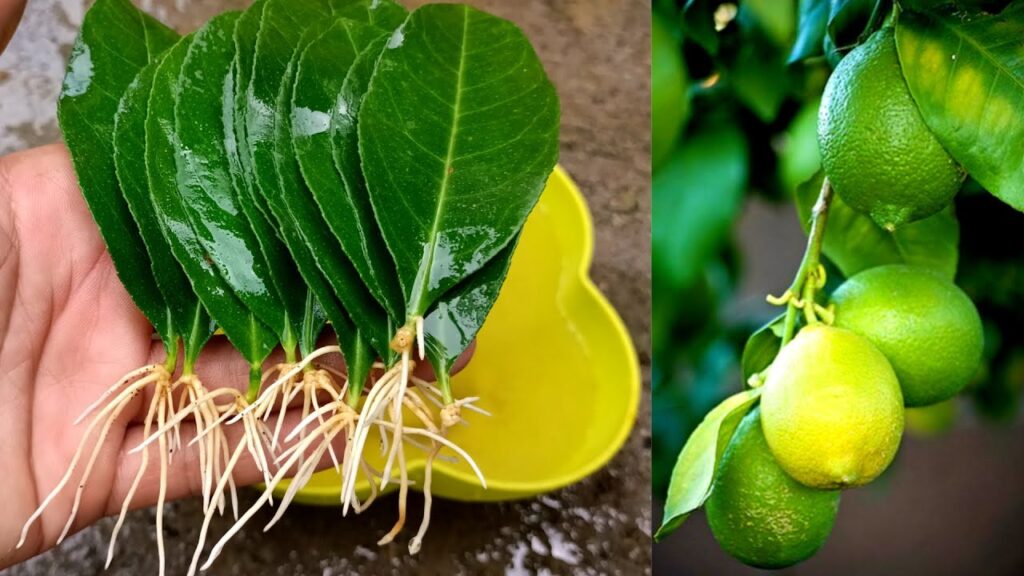
Rooting takes patience.
First 7–10 days:
Leaf stays green and firm.
Days 15–25:
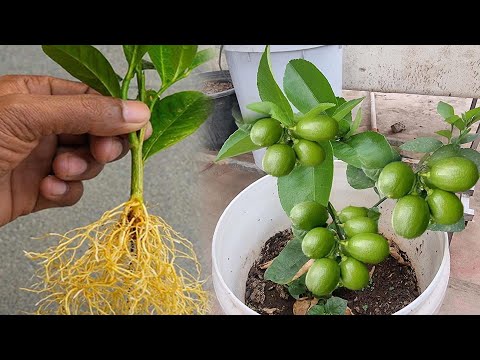
Roots start forming at the node.
After 3–4 weeks:
Tiny new leaf shoots appear!
This is the sign your propagation was successful.
Full rooting:
Usually 4–6 weeks depending on climate.
If the leaf turns brown or shrivels, it failed.
But if you follow the humidity method carefully, failures are rare.
STEP 8: Transplanting the Rooted Lemon Leaf Plant
After 4–6 weeks, gently check for roots by touching the base.
If the plant feels firm, it has rooted.
Shift to a bigger pot (8–10 inches)
Use nutrient-rich soil:
- 40% garden soil
- 30% compost
- 30% sand/cocopeat
Remove the plastic dome slowly
Let the plant adjust to fresh air gradually.
Water lightly
Avoid root shock.
Caring for Your New Lemon Plant
Your tiny leaf-grown plant now needs proper care.
Sunlight
3–4 hours of gentle morning sunlight.
Watering
Water only when the top 1 inch of soil dries.
Fertilizing
After 4–6 weeks, use:
- Vermicompost
- Cow dung manure
- Liquid seaweed
- Citrus fertilizer (optional)
Pruning
Once the plant is 1 ft tall, pinch the top to encourage branching.
Pest Control
Spray neem oil every 10–15 days.
Your plant will grow steadily with this routine.
When Will a Leaf-Grown Lemon Plant Bear Fruit?
A leaf-cutting grown lemon plant generally fruits in:
3–4 years
This is slightly slower than branch cuttings but still faster than seed-grown trees (which take 4–7 years).

The fruits will be identical to the parent tree.
Common Mistakes to Avoid
Using a leaf without a node
This will never root.
Overwatering
Causes rot and fungus.
Direct sunlight
Burns the leaf.
Not maintaining humidity
Leaves dry up quickly.
Using heavy clay soil
Blocks root development.
Avoid these mistakes to increase success dramatically.
Final Thoughts
Growing lemon trees from leaves is not only possible—it’s one of the most fascinating and rewarding propagation projects for home gardeners. With the right leaf cutting, proper humidity, and a gentle care routine, you can achieve 100% success and grow a strong lemon plant that will one day bear fresh, juicy lemons.